今週は、ソフトバンクの広告について書きたいと思う。ホワイトプランを促進するためのソフトバンクのキャンペーンは依然として、好調だ。キャンペーンの目玉としては 上戸彩主演のコマーシャルを制作し、日本の国民に「予想外な家族」を浸透させた。 顧客にインパクトを与えるために、ソフトバンクは少し可笑しく、ばかばかしいCMを作っているに違いないが、同時に少し日本家族の範囲を再定義していると思う。
このCMの家族は、ある程度典型的な日本家族を反映している。例えば、母親は主婦だし、お兄さんやアヤは仕事をしているのに、まだ実家に住んでいる。お父さんはしばしばいたずらして、お母さんに叱られる。お兄さんはスーツを着て、親孝行する。アヤはソフトバンクに勤め、食卓に座ってお母さんと喋ったり、祖父を訪ねに行ったりすること等だ。しかし、ここからが典型的な家族と大きく異なるところだ。父親は犬であり、お兄さんは礼儀正しい黒人だ。保守的な価値観を保ちながら、このマーケティング戦略は日本の家族を再構成している。具体的には、愉快な家族をイメージするために、典型的な家族の要素としてのサラーリマンの父親と兄を排除し、そのかわりに権力を持たない外国人のお兄さんと犬のお父さんを活用した。奇妙なことにお母さんが一番権力を持っている。
ソフトバンクがこの戦略を選択したのは、家族の概念でアピールをしながら、父親の絶対的な権力のような家族の中のマイナスイメージを回避できるからだ。特に強い家父長制家族に対して日本人が持つ悪い思い出等を避け、おとぎ話のような家族を作った。この戦略は家族の中で財布のひもを握る母親に直接アピールをする。家族ホワイトプランは家族向けの通話プランなので、ソフトバンクを選べば、もっと家族と電話で話せ、家族との関係を強化できるというメーセンジを伝えている。 CMは更に親しい家族関係を作りたい母親をターゲットにし、母親の感情にアピールしている。
Wednesday, May 19, 2010


株価分析:フォグバーの成功
今週のポストとしては、資生堂フォグバーの業績を評価するため、株価の情報を分析したいと思う。 資生堂の株価の推移からフォグバーが成功したことが理解できると思うが、外的な影響(例えば、リーマン ショック)を削るために、資生堂の競合会社、マンダム株式会社(ギャツビー)とコーセー株式会社の株価と比較する。この三つ社を選んだ理由は、同じ市場で競争し、マンダムもQUICKMOVINGMISTという商品で直接資生堂に挑戦したため、業績比較から資生堂フォグバーの売り上げ、フォグバーのマーケティング戦略の効果が分かりやすいからだ。
資生堂:Blue
マンダム:Green
コーセー:Red
このグラフは2005年から株価を示している。資生堂は青、マンダムは緑、コーセーは赤だ。資生堂はTsubakiというシャンプーの売り上げで競合会社を引き離していた。 そして、リーマンショックが起こり、2008年に資生堂とマンダムの株価は下落した。2009年の後半に資生堂はフォグバーを発売し、段々株価が上がってきた。マンダムの株価も2010年の後半は上昇したが、横ばい状態に続いている。これからフォグバーのおかげで資生堂は男性の整髪料市場の大部分を占めるようになりそうだ。

資生堂:Blue
マンダム:Green
コーセー:Red
このグラフは2005年から株価を示している。資生堂は青、マンダムは緑、コーセーは赤だ。資生堂はTsubakiというシャンプーの売り上げで競合会社を引き離していた。 そして、リーマンショックが起こり、2008年に資生堂とマンダムの株価は下落した。2009年の後半に資生堂はフォグバーを発売し、段々株価が上がってきた。マンダムの株価も2010年の後半は上昇したが、横ばい状態に続いている。これからフォグバーのおかげで資生堂は男性の整髪料市場の大部分を占めるようになりそうだ。
Thursday, April 22, 2010
競合商品:インターネットの戦場
今週のポストとしては、先週のフォグバーの話を続けたいと思う。先週フォグバーのマーケティング戦略について触れたが、もう少し具体的にフォグバーのウェブサイトを分析する。さらに、ギャツビーのQUICKMOVINGMISTという競合商品も分析し、フォグバーと比較してみたい。
さて、フォグバーのために資生堂が作ったウェブサイトは傑作だ 。 サイトに入るとフォグバーのトリコロールカラーに迎えられ、あか抜けてシンプルなブランドイメージで「頭の中が満たされる」。資生堂は雑然としたインターフェースより、シンプルな使いやすいサイトを作り、これがブランドに合っている。
サイトにはニュースや商品情報やCM情報やコンセプト等の部分があるので、読者としては沢山の情報にアクセスでき、いいと思う。特にフォグバーは他の既存商品と違い、ワックスでも、ヘアスプレーでもないので、顧客に使い方を教えるのは大事なことだ。この目的達成のため、使い方を説明しているビデオや画像も付け、美容師がスリーステップで簡単に説明する部分から科学的なメカニズムまでもある。この説明ビデオは髪の長さや商品の種類によって区分し、分かりやすくした。しかも、主に男性向けの商品なのに、消費者ベースを幅広くするために女性のための使い方の説明もある。このサイトは一言で言うと極めて詳しい。
しかし、その裏側から見ると、たまに載っている情報は若干冗長になってしまう。メインページで原田忠という美容師によって使い方が説明されているが、多様なヘアスタイルを示すのにヘアスタイリストのインタビューの部分で何回も同じような説明が繰り返されており、少し過剰なのではないだろうか。確かにこの高級サロンで働いている美容師は資生堂とフォグバーの上品なイメージを強調しているが、少し浪費的になってしまう。もう少しシンプルに情報を示し、スリム化すればいいかもしれない。
ギャツビーのQUICKMOVINGMISTのサイトは、逆に情報を簡単に示しているがサイトのデザイン自体は派手で、安っぽく見えるので、資生堂とは別の対象をターゲットにしていることが明白だ。特に多角的マーケティング戦略を使わず、資生堂と競争できるようにかなり木村拓也に依存しているようだ。しかし、QUICKMOVINGMISTのサイトから見ると、この新商品は若者を顧客のターゲットにしているので、40歳近い木村拓哉を使うのは若干矛盾するのではないだろうか。 資生堂のトリコロールカラーの代わりに、蛍光色を使い、木村拓哉を使っているが、全体的にギャツビーのサイトに載っている映像や画像等は、資生堂の丹念に考案された戦略にかなわない。ギャツビーのサイトをざっと調べるとQUICKMOVINGMISTが資生堂のフォグバーの競合商品として急いで発売されたことが明らかだ。資生堂と比べ、見てすぐ分かる情報の示し方を工夫しているが、デザインのほうが芳しくない
さて、フォグバーのために資生堂が作ったウェブサイトは傑作だ
 。 サイトに入るとフォグバーのトリコロールカラーに迎えられ、あか抜けてシンプルなブランドイメージで「頭の中が満たされる」。資生堂は雑然としたインターフェースより、シンプルな使いやすいサイトを作り、これがブランドに合っている。
サイトにはニュースや商品情報やCM情報やコンセプト等の部分があるので、読者としては沢山の情報にアクセスでき、いいと思う。特にフォグバーは他の既存商品と違い、ワックスでも、ヘアスプレーでもないので、顧客に使い方を教えるのは大事なことだ。この目的達成のため、使い方を説明しているビデオや画像も付け、美容師がスリーステップで簡単に説明する部分から科学的なメカニズムまでもある。この説明ビデオは髪の長さや商品の種類によって区分し、分かりやすくした。しかも、主に男性向けの商品なのに、消費者ベースを幅広くするために女性のための使い方の説明もある。このサイトは一言で言うと極めて詳しい。
しかし、その裏側から見ると、たまに載っている情報は若干冗長になってしまう。メインページで原田忠という美容師によって使い方が説明されているが、多様なヘアスタイルを示すのにヘアスタイリストのインタビューの部分で何回も同じような説明が繰り返されており、少し過剰なのではないだろうか。確かにこの高級サロンで働いている美容師は資生堂とフォグバーの上品なイメージを強調しているが、少し浪費的になってしまう。もう少しシンプルに情報を示し、スリム化すればいいかもしれない。
ギャツビーのQUICKMOVINGMISTのサイトは、逆に情報を簡単に示しているがサイトのデザイン自体は派手で、安っぽく見えるので、資生堂とは別の対象をターゲットにしていることが明白だ。特に多角的マーケティング戦略を使わず、資生堂と競争できるようにかなり木村拓也に依存しているようだ。しかし、QUICKMOVINGMISTのサイトから見ると、この新商品は若者を顧客のターゲットにしているので、40歳近い木村拓哉を使うのは若干矛盾するのではないだろうか。 資生堂のトリコロールカラーの代わりに、蛍光色を使い、木村拓哉を使っているが、全体的にギャツビーのサイトに載っている映像や画像等は、資生堂の丹念に考案された戦略にかなわない。ギャツビーのサイトをざっと調べるとQUICKMOVINGMISTが資生堂のフォグバーの競合商品として急いで発売されたことが明らかだ。資生堂と比べ、見てすぐ分かる情報の示し方を工夫しているが、デザインのほうが芳しくない
Tuesday, April 13, 2010
資生堂 FOG BAR

消費者へのアピール
この商品を発売する際に、資生堂は主に若い男性を対象にしていたが、女性の消費者のことも考えていた。男性へ「この商品を使えば、かっこ良くなる」というメッセージを伝えるために、人気がある男性俳優(瑛太、小栗旬、妻夫木聡
 、三浦春馬))をCM戦略に利用したが、これが女性への効果的なアピールとなったのだ。このキャンペーンによって、ビートルズをコンセプトとした様々なバージョンのCMが登場した。実際のビートルズを使うかわりに、日本人の俳優がビートルズのメンバーに扮し、イギリスという舞台で色々なビートルズの歴史的な行動や衣服や髪型を真似したのだ。資生堂がビートルズのイメージを使った理由は一見しただけでは少し分かりにくいかもしれない。フォグバーが対象とする消費者は主に15歳から30歳までの男性なので、その世代はビートルズを思い出せない。しかし、中高生はあまり自分で買い物をしないので、母親が買ってくれる場合が多いだろう。現在の若者の両親はビートルズ世代である。従ってビートルズを懐かしく感じ、フォグバーを買う可能性が高くなる。フォグバーを買う際、ビートルズを思い出すだけではなく、60年代に外国文化を初めて味わった時の憧れも思い出すようになる。このように、実際に社会における国際化は業界の広告やCM等に反映される。
国際色豊かなイメージ
資生堂は、わざと外国的なイメージを作るように努力したのだと思う。ビートルズのコンセプト以外にももっと国際的、お洒落なイメージを作るために、わざわざイギリスで撮影した。CMにはイギリスの名所が出てくる。例えば、イギリスの有名なふらふらしている帽子を冠ったり、電話ボックスから出てきたり、イギリスっぽい車に乗ったりする。さらに菅井きんという有名な女優はイギリス女王の役である。それに加え、フランスやイギリス等、西欧諸国の旗の色が容器のデザインに使われている。従ってフォグバーを一見すればイギリスが思い浮かび、CMや広告等を思い出すことになる。この商品の最大の特徴は競合商品より値段が高いこととともに、お洒落なイメージを強調していることである。
資生堂が大量のお金をこのプロジェクトに投資したことが明らかになった。新商品開発をする際、一般の消費者を顧客にし、競合他社の市場参入を防ぐことが一番大事となる。早めにブランドイメージを定着させ、顧客との関係を強固にすることが必要だから、資生堂はこのフォグバーにお金をつぎ込んでいるわけだ。フォグバーに対してギャツビーはもうQUICK MOVING MISTという競合商品を発売したが、資生堂が既にフォグバーのイメージを定着させていれば、競合商品を市場から閉め出せるかもしれない。これからもこの競合がどのように発展するかに注意するつもりだ。
Tuesday, April 06, 2010
チラシのデジタル化と国際化
 日本で、ブランドイメージを定着させるとともに、海外にも進出できたので、2005年以降、ユニクロは日本の成功した企業の象徴の一つとして挙げられている。このような成功を説明する際に、中国で安く生産した衣服だという理由はよく指摘されるが、低い生産コストよりしばしば鋭いマーケティングのほうが大事だと思われている。
そこで、ユニクロの新しいデジタルチラシをユニクロの典型的なマーケティングの例として位置付けたい。このような広告が面白いという理由は二つある。まず、ユニクロは折り込みチラシの形に広告をデザインし、それに加えインタラクティブな特徴も入れた。商品を見るだけではなく、もし気に入った物があったら、見る人は画像をクリックして、その商品の細部やらもっと詳しい画像を見ることができる。さらにそのまま購入することもできる。このような広告はユニクロの売り上げ戦略に特に合っている。二つ目の面白い点はユニクロは唯一絶対のスタイルより、無数の商品を現代の多様化した消費者に提供し、その幅広い選択肢から何を選ぶかは顧客の自由に任せていることである。デジタルチラシは実際の折り込みチラシのように一斉に沢山の商品を掲載していると同時に、一つ一つの商品の情報も細部にまで渡っている。これにより、ユニクロの商品の数の多さも質の高さも強調できることになる。

広告のデザイン以外の特徴はところどころに英語が使われて、ハーフと白人のモデルも多いことである。これは日本における国際化の一つの印だ。この特徴は、日本に住んでいるのは日本人ではない人のほうが相対的に少ないのに、日本人が多様化した社会に憧れていることを示唆する。実際にユニクロはこのような国際的なイメージをよくテレビCM等に採用しているので、ある程度ユニクロの成功に貢献しているようだ。
Tuesday, February 02, 2010
東京の将来

経済力だけでなく文化や社会的な洗練においても、ロンドンとニューヨークとともに、東京は高い地位を占めている。しかし、労働力不足をはじめとした少子化や高齢化によってもたらされた問題が増加しつつあるので、東京の競争力が危険にさらされた。であるから、東京の指導者は八十年代に弱い経済に由来する問題に直面したニューヨークとロンドンから教訓を得るのではないだろうか。
新しい独立した市役所をはじめとして、法人税削減、移民政策改革などが必要だと思う。東京首都圏の政権を強化すれば、以前よりビジネスに対する政策を通しやすくなる。先進国の中では東京の法人税率が一番高いので、国際ビジネスにとっての東京の魅力を挙げるためにこうした改革が非常に必要のではないだろうか。それに加え、知識集約産業を引きつけるために移民に対して規制を緩めるべきだと思う。要するに、注目したいのは経済を回復するためにある程度東京を国際化させるべきだという点である。そのような改革が出来れば、東京の未来も明るくなるのであろう。
Tuesday, November 18, 2008
The Global Recession: Holding the Flood Waters at Bay?
This week I would like to continue my discussion of the state of the Japanese economy during the current financial crisis. Last w eek I wrote about the rising value of the Yen. Globally the rising value of the Yen will have a large impact on trade flows. I would like to extend this discussion by exploring Japan’s prospects in the upcoming period of global recession. As the global recession seems unavoidable at this point, many analysts are questions how deep and long the downturn will be. This week Japan joined a list of nations announcing that their economies were already in recession. It also seems likely that the U.S. economy is in recession, given that Japan’s recession stems from a contract in exports to the U.S. and Europe. As European and American consumers tightened their spending following the subprime crisis, Japanese exports have plummeted. Additionally, the increase in the value of the Yen has also cut into Japanese export earnings. There has been a lot of mixed information about how severe the recession will be for Japan; with some sources saying that the Japan’s economy is in a good position and other sources claiming otherwise. If Japan does have a severe recession what will it mean for the current Prime Minister and political system? In order to answer these questions I have decided to search the web to see what the blogosphere have to say concerning the issue. The first article I have chosen is by Alpha Sources blog entitled, “Japan- the Recession is Here”. The second is an article called “Japan Sinks” hosted by the Japan Forum. I have included the comments below, but have also linked to the sites for your convenience.
Japan Sinks
Tobias,
Thanks for you post on the possible political effects of the current global recession for Japan. I agree with your assessment that the Japanese political elite has failed to come up with effective policy to end the long stagnation of the Japanese economy. Particularly, the last three Prime Ministers have been unable to address the problems facing Japan in the last few years. Hopefully the global recession will break the LDP’s hold on power and reinvigorate the political system. Although there does not appear to be a viable alternative to the LDP in the DJP, couldn’t a major election loss split the LDP? I think the most effective way to change the political system would be such a split in the LDP, separating the more conservative faction from the reformist factions. This would introduce a real competition of ideas into the Japanese political system. In order to reach a competitive system, the DJP may have to win several elections to induce change in the LDP’s staid party structure. The past 8 years with Koizumi’s reforms, a succession of three different Prime Ministers, and the current economic crisis all point to a likely crisis of legitimacy for the LDP. Do you see that as a likely outcome or do you think that Japanese politics will muddle along as usual?
While I found your article extremely engaging, I have one point of minor contention. You state that Taro Aso “leaves behind a country tottering on the brink of ruin.” Don’t you think that is a bit of an exaggeration? It is precisely because Japanese people have suffered relatively little from the last 20 years of varying degrees of political ineptness that the system continues the muddle along. In fact compared to the EURO zone and the U.S., Japan’s recession seems that it will be relatively minor. In fact, given Japan’s relatively healthy banking system it seems to possess a unique advantage in an international financial meltdown. As a recent article on Bloomberg.com stated, “Japan's got a fairly straightforward problem: it's experiencing an export-driven recession…it's nasty, but not particularly complicated. The rest of the world has a financial system disaster on its hands.”What is your opinion on this line of thought? Thanks again, and I look forward to reading your future posts.
Cole
Japan- the Recession is Here
CV,
Thanks for your detailed analysis of the Japanese economy as it heads into recession. It is pretty clear that the EURO zone and U.S. economies will be very hard hit by the financial crisis. According to your analysis the Japanese economy was already on a weak foundation before the financial crisis entered its acute phase. The Japanese financial system seems to be in pretty good shape in comparison to the European and American systems. However, since the Japanese economy is pretty much dependent upon exports to both regions, a recession in those regions will draw out the Japanese economy’s recession. Do you think there is room for Japan to offset its export losses by investing resources in expanding its hold in developing markets such as China, India, Russia, and Brazil? Given the weak position of America’s carmakers vis-à-vis Japanese carmakers, Japanese carmakers could use this opportunity to expand their market share further in America and in middle-income nations. You also state in your article that,“ increased savings through deposits are likely to be channeled into cheap government funding, we also know that Japan’s savings are increasingly flowing out towards higher returns.” Given the volatility of the current global financial environment, do you think that more Japanese savings will be invested domestically?
Even if Japan performs better relative to the other developed countries, it still seems to be facing some serious problems. Japan has never properly adjusted away from an export-based development model, even though it has a highly developed economy. Recently, the American and British economic models of finance-based, capital intensive growth also seem faulty. In what do you think Japan must reform its economy to be able to face its future challenges?
Thanks again. I look forward to reading your future posts on this issue.
Cole
 eek I wrote about the rising value of the Yen. Globally the rising value of the Yen will have a large impact on trade flows. I would like to extend this discussion by exploring Japan’s prospects in the upcoming period of global recession. As the global recession seems unavoidable at this point, many analysts are questions how deep and long the downturn will be. This week Japan joined a list of nations announcing that their economies were already in recession. It also seems likely that the U.S. economy is in recession, given that Japan’s recession stems from a contract in exports to the U.S. and Europe. As European and American consumers tightened their spending following the subprime crisis, Japanese exports have plummeted. Additionally, the increase in the value of the Yen has also cut into Japanese export earnings. There has been a lot of mixed information about how severe the recession will be for Japan; with some sources saying that the Japan’s economy is in a good position and other sources claiming otherwise. If Japan does have a severe recession what will it mean for the current Prime Minister and political system? In order to answer these questions I have decided to search the web to see what the blogosphere have to say concerning the issue. The first article I have chosen is by Alpha Sources blog entitled, “Japan- the Recession is Here”. The second is an article called “Japan Sinks” hosted by the Japan Forum. I have included the comments below, but have also linked to the sites for your convenience.
Japan Sinks
Tobias,
Thanks for you post on the possible political effects of the current global recession for Japan. I agree with your assessment that the Japanese political elite has failed to come up with effective policy to end the long stagnation of the Japanese economy. Particularly, the last three Prime Ministers have been unable to address the problems facing Japan in the last few years. Hopefully the global recession will break the LDP’s hold on power and reinvigorate the political system. Although there does not appear to be a viable alternative to the LDP in the DJP, couldn’t a major election loss split the LDP? I think the most effective way to change the political system would be such a split in the LDP, separating
 the more conservative faction from the reformist factions. This would introduce a real competition of ideas into the Japanese political system. In order to reach a competitive system, the DJP may have to win several elections to induce change in the LDP’s staid party structure. The past 8 years with Koizumi’s reforms, a succession of three different Prime Ministers, and the current economic crisis all point to a likely crisis of legitimacy for the LDP. Do you see that as a likely outcome or do you think that Japanese politics will muddle along as usual?
While I found your article extremely engaging, I have one point of minor contention. You state that Taro Aso “leaves behind a country tottering on the brink of ruin.” Don’t you think that is a bit of an exaggeration? It is precisely because Japanese people have suffered relatively little from the last 20 years of varying degrees of political ineptness that the system continues the muddle along. In fact compared to the EURO zone and the U.S., Japan’s recession seems that it will be relatively minor. In fact, given Japan’s relatively healthy banking system it seems to possess a unique advantage in an international financial meltdown. As a recent article on Bloomberg.com stated, “Japan's got a fairly straightforward problem: it's experiencing an export-driven recession…it's nasty, but not particularly complicated. The rest of the world has a financial system disaster on its hands.”What is your opinion on this line of thought? Thanks again, and I look forward to reading your future posts.
Cole
Japan- the Recession is Here
CV,
Thanks for your detailed analysis of the Japanese economy as it heads into recession. It is pretty clear that the EURO zone and U.S. economies will be very hard hit by the financial crisis. According to your analysis the Japanese economy was already on a weak foundation before the financial crisis entered its acute phase. The Japanese financial system seems to be in pretty good shape in comparison to the European and American systems. However, since the Japanese economy is pretty much dependent upon exports to both regions, a recession in those regions will draw out the Japanese economy’s recession. Do you think there is room for Japan to offset its export losses by investing resources in expanding its hold in developing markets such as China, India, Russia, and Brazil? Given the weak position of America’s carmakers vis-à-vis Japanese carmakers, Japanese carmakers could use this opportunity to expand their market share further in America and in middle-income nations. You also state in your article that,“ increased savings through deposits are likely to be channeled into cheap government funding, we also know that Japan’s savings are increasingly flowing out towards higher returns.” Given the volatility of the current global financial environment, do you think that more Japanese savings will be invested domestically?
Even if Japan performs better relative to the other developed countries, it still seems to be facing some serious problems. Japan has never properly adjusted away from an export-based development model, even though it has a highly developed economy. Recently, the American and British economic models of finance-based, capital intensive growth also seem faulty. In what do you think Japan must reform its economy to be able to face its future challenges?
Thanks again. I look forward to reading your future posts on this issue.
Cole
Monday, November 10, 2008
Yen, Dollars, and the Subprime Crisis
In recent weeks the Japanese stock market has suffered declines even greater than the American and European markets. At first glance, this might seem somewhat puzzling. Japan’s banking system has ha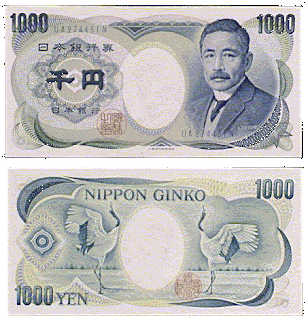 d little exposure to the sub-prime mortgage mess, and Japan’s consumers have an estimated $15 trillion in savings. Japan would appear to have relatively few worries compared to America and its imploding banking system and skyrocketing unemployment. To a degree the fall of the Japanese stock market can be attributed to concern over the weak state of the American and Euro Zone economies, together which account for over a third of Japan’s export markets. However, if one takes a closer look what is really scaring Japanese traders is something that America traders usually welcome with joy: currency appreciation. Since the beginning of the financial crisis in October, the Yen has increased about 30% in valuation vis-a-vis the dollar, and even more against the Euro. Why is this giving Japan such a scare? The origins of the Yen’s current appreciation are closely tied to the origin of the sub-prime crisis and America and Europe’s current financial woes. A stronger Yen is likely to damage Japan’s economy in the short run, however, it is probable that it also signals a shift to more consumer purchasing power in Japan, which may be good news for the rest of the world.
As I discussed in my first post, Japan’s banking system is propped up by an enormous sum of money saved by Japanese households. In fact, Japanese households save so much money there has been a chronic and massive excess of money in Japan. As can be seen here, even after loans there is colossal excess of 145 trillion Yen held by Japanese banks. In order to put this money to productive use banks invested huge sums abroad; the majority being used to by US dollars and debt. In this way, Japan’s over saving problem helped to feed America’s over consumption problem. The Japanese government allowed this to go on because it pushed the Yen’s value down versus the Dollar and EURO. The cheaper the Yen became, the more competitive Japanese exports became, allowing Japan to increase trade surpluses even as its imports skyrocketed . Both of these contributed to the deteration of the U.S. economy of the past several years.
American politicians constantly tout the need for a stronger dollar, demonstrated by the "strong-dollar policy" of the past twenty years. As recently as February of this year, even President Bush, who has presided over the largest deficits in American, history claimed, "We believe in a strong dollar policy...and in the ability of the economy to grow economically."However, they are mistaken in their assumption that a stronger dollar means a stronger economy. A stronger dollar h as made U.S. manufacturing exports increasingly uncompetitive abroad, while increasing the competiveness of foreign imports. A prime example is the rapid detorioration of the American car industry, not only abroad, but within the U.S. as well. At the same time Japanese cars have virtually conquered the U.S. and European markets. That is not only because Japanese cars tend to be more fuel efficient and suffer fewer break downs, but because they been very cheap compared to American made cars. This same logic can be applied to a variety of Japanese products that are edging out their European and American competitors such as computers, driers, washers, televisions, cell phones etc. Japanese corporations reinvested their profits, leaving cash to spare in the banking system. The spare cash found its way back to the U.S. feeding American’s borrowing binge, even as U.S. manufactures sold less overseas. That brings us to the financial crisis and the current strengthening of the Yen.
The rapid strengthening of the Yen versus other currencies is evidence of Japanese investments returning from abroad, and is likely to lead to a decline in the enormous Japanese trade surplus. As the financial crisis has made American and European assets increasingly risky looking to investors, investment in the Yen has increased. Additionally, Japan’s banks are recalling their investments from abroad. The rise in the value of the Yen coupled with the global downturn will lead to a sharp contraction in the size of Japan’s trade surplus. However, a stronger Yen, while hurting exports, will further increase the buying power of the Japanese consumer. Although a contraction in exports will hurt Japanese businesses, the Japanese consumer should be able to enjoy unprecedented buying power. This might provide a bit of a cushion for American and European businesses that export to Japan. If the Japanese consumer uses that buying power to purchase more imports both the European and American manufacturing. The Japanese consumer has reputation for being frugal, and the news of a global down turn will only enforce these habits. Time will tell if the strengthening of the Yen will be a win- lose situation, or ultimately reenforce an already deep global downturn.
d little exposure to the sub-prime mortgage mess, and Japan’s consumers have an estimated $15 trillion in savings. Japan would appear to have relatively few worries compared to America and its imploding banking system and skyrocketing unemployment. To a degree the fall of the Japanese stock market can be attributed to concern over the weak state of the American and Euro Zone economies, together which account for over a third of Japan’s export markets. However, if one takes a closer look what is really scaring Japanese traders is something that America traders usually welcome with joy: currency appreciation. Since the beginning of the financial crisis in October, the Yen has increased about 30% in valuation vis-a-vis the dollar, and even more against the Euro. Why is this giving Japan such a scare? The origins of the Yen’s current appreciation are closely tied to the origin of the sub-prime crisis and America and Europe’s current financial woes. A stronger Yen is likely to damage Japan’s economy in the short run, however, it is probable that it also signals a shift to more consumer purchasing power in Japan, which may be good news for the rest of the world.As I discussed in my first post, Japan’s banking system is propped up by an enormous sum of money saved by Japanese households. In fact, Japanese households save so much money there has been a chronic and massive excess of money in Japan. As can be seen here, even after loans there is colossal excess of 145 trillion Yen held by Japanese banks. In order to put this money to productive use banks invested huge sums abroad; the majority being used to by US dollars and debt. In this way, Japan’s over saving problem helped to feed America’s over consumption problem. The Japanese government allowed this to go on because it pushed the Yen’s value down versus the Dollar and EURO. The cheaper the Yen became, the more competitive Japanese exports became, allowing Japan to increase trade surpluses even as its imports skyrocketed . Both of these contributed to the deteration of the U.S. economy of the past several years.
American politicians constantly tout the need for a stronger dollar, demonstrated by the "strong-dollar policy" of the past twenty years. As recently as February of this year, even President Bush, who has presided over the largest deficits in American, history claimed, "We believe in a strong dollar policy...and in the ability of the economy to grow economically."However, they are mistaken in their assumption that a stronger dollar means a stronger economy. A stronger dollar h
as made U.S. manufacturing exports increasingly uncompetitive abroad, while increasing the competiveness of foreign imports. A prime example is the rapid detorioration of the American car industry, not only abroad, but within the U.S. as well. At the same time Japanese cars have virtually conquered the U.S. and European markets. That is not only because Japanese cars tend to be more fuel efficient and suffer fewer break downs, but because they been very cheap compared to American made cars. This same logic can be applied to a variety of Japanese products that are edging out their European and American competitors such as computers, driers, washers, televisions, cell phones etc. Japanese corporations reinvested their profits, leaving cash to spare in the banking system. The spare cash found its way back to the U.S. feeding American’s borrowing binge, even as U.S. manufactures sold less overseas. That brings us to the financial crisis and the current strengthening of the Yen.The rapid strengthening of the Yen versus other currencies is evidence of Japanese investments returning from abroad, and is likely to lead to a decline in the enormous Japanese trade surplus. As the financial crisis has made American and European assets increasingly risky looking to investors, investment in the Yen has increased. Additionally, Japan’s banks are recalling their investments from abroad. The rise in the value of the Yen coupled with the global downturn will lead to a sharp contraction in the size of Japan’s trade surplus. However, a stronger Yen, while hurting exports, will further increase the buying power of the Japanese consumer. Although a contraction in exports will hurt Japanese businesses, the Japanese consumer should be able to enjoy unprecedented buying power. This might provide a bit of a cushion for American and European businesses that export to Japan. If the Japanese consumer uses that buying power to purchase more imports both the European and American manufacturing. The Japanese consumer has reputation for being frugal, and the news of a global down turn will only enforce these habits. Time will tell if the strengthening of the Yen will be a win- lose situation, or ultimately reenforce an already deep global downturn.
Tuesday, November 04, 2008
Green Revolution: Perspectives from Japan
Today I am would like to take the opportunity to explore the globalization of the environmentalist movement and how this is having effects upon Japan’s own green consciousness. While I was in Japan, I noticed that Japan is in many ways greener than Europe, especially in the areas of public transportation, energy conservation, and waste management. However, most of those were government directed initiatives and the strong NGO environmental movement seemed to be lacking in comparison to the U.S. and Europe. The Japanese environmental movement began around the time of the oil shock in the late 1970’s. In comparison to American and European environmental movements that seem to focus on a “saving the planet” me ntality, in Japan, environmentalism has always had a strong nationalist origin. Since Japan has no fossil fuels of its own, the government has worked towards energy conservation and efficiency for the purpose of national and economic security. Therefore, I decided to explore the blogosphere and investigate ways in which globalization is changing the Japanese environmental movement and how Japan’s own environmental policy is influencing other nations in their pursuit of energy independence and environmental harmony. The first article I would like to discuss is titled. “Japan as a Model For China’s Green Revolution”, and is hosted on The Green Leap Forward, a blog about environmentalism in China. The second blog I chose was one of those on my link roll, Trends in Japan. A recent article on Trends in Japan focuses on a recent fashion show and how collaboration with an environmental NGO produced some interesting results. The links to both comments are hyperlinked below, and additionally I have provided my two comments for each site.
"Japan as a Model for China's Green Revolution?"
Julian, I really enjoyed you post China’s current environmental situation, and how Japan can provide a model for China to emulate as it moves forward with environment policy. Despite China’s rapid growth, I think there is a lot of room for China to control its CO2 output while its economy develops. Additionally, I think Japan provides a good example of how a Green Revolution and economic development are not mutually exclusive. As your article stated, Japan’s own move into more energy efficient production and production of energy efficient products helped to move its economy into a high-tech, lucrative direction. Even now, many of the companies that managed to produce these energy efficient products in the 1970’s Oil Shock are the most competitive companies from Japan, such as Honda, Toyota, Sharp, etc. Like Japan in the 1970’s, China seems to be a critical junction in the development of its economy away from a labor intensive one to a capital -intensive economy that produces high-tech products. The recent scandals with tainted food products and product defects have hurt China’s reputation globally. A move into “green products” and a “green economy” has the potential to give China’s manufacturers a better reputation amongst the globes consumers, particularly those in the developed world. This would allow China to avoid any sort of consumer backlash against its products. In your article, you express a fear that a move into high-tech manufacturing will simply move the production of goods from China to other nations such as Vietnam and Indonesia. However, greater national energy, such as that achieved by Japan, would help to control the cost of energy for production helping China to produce energy at cheaper rates than its competitors. With cheaper energy, China could remain competitive even in the manufacture of low-end goods vis-à-vis developing countries for some time to come. Japan’s state driven approach to environmental regulation and energy conservation will be easier for China to implement than a more NGO driven movement, given China’s lack of a functioning democratic process. If the Chinese government sees environmentalism as being equal to energy independence, it will be much more likely to pursue significant reforms in that area. So I’d like to thank for your timely article on this important issue.
"Tokyo Girls Collection Gets Green"
Rebecca, I enjoyed your timely article on Tokyo Girls Collection’s attempt to go green. I appreciate how you attempted to analyze what aspects of the show were successful and innovative in comparison to the more half-hearted aspects such as the “eco bag”. I think the use of model statements on how they reduce their own carbon footprints or work to live a more environmentally conscious existence is particularly important. The influence celebrities have over fashion, in both Japan and abroad, is undeniable since they are the source of many new trends. The use of celebrities as a source of environmentally conscious lifestyle is particularly important in the age of mass global media. The “My Challenge” pledges by the models to reduce their carbon output by 1k a day added a degree of legitimacy that the statements would have otherwise lacked.
While I thoroughly enjoyed your post, I found myself hoping that you discussed the importance of the issue at hand and what effects you thought I might have for the Japanese environmentalist movement as a whole. I felt that they entry was too much of just a brief summary of events, but would gain much from a more detailed analysis. Just added a few sentences of commentary would have filled out the article a bit more and made it more engaging for the reader. I understand that the purpose of Trends of Japan may be to present a more news-like reporting of events, however, given the lack of information about Japan related trends online, an occasional discussion of the topic would create a more engaging blog. I look forward to reading your entries in the future.
ntality, in Japan, environmentalism has always had a strong nationalist origin. Since Japan has no fossil fuels of its own, the government has worked towards energy conservation and efficiency for the purpose of national and economic security. Therefore, I decided to explore the blogosphere and investigate ways in which globalization is changing the Japanese environmental movement and how Japan’s own environmental policy is influencing other nations in their pursuit of energy independence and environmental harmony. The first article I would like to discuss is titled. “Japan as a Model For China’s Green Revolution”, and is hosted on The Green Leap Forward, a blog about environmentalism in China. The second blog I chose was one of those on my link roll, Trends in Japan. A recent article on Trends in Japan focuses on a recent fashion show and how collaboration with an environmental NGO produced some interesting results. The links to both comments are hyperlinked below, and additionally I have provided my two comments for each site."Japan as a Model for China's Green Revolution?"
Julian, I really enjoyed you post China’s current environmental situation, and how Japan can provide a model for China to emulate as it moves forward with environment policy. Despite China’s rapid growth, I think there is a lot of room for China to control its CO2 output while its economy develops. Additionally, I think Japan provides a good example of how a Green Revolution and economic development are not mutually exclusive. As your article stated, Japan’s own move into more energy efficient production and production of energy efficient products helped to move its economy into a high-tech, lucrative direction. Even now, many of the companies that managed to produce these energy efficient products in the 1970’s Oil Shock are the most competitive companies from Japan, such as Honda, Toyota, Sharp, etc. Like Japan in the 1970’s, China seems to be a critical junction in the development of its economy away from a labor intensive one to a capital -intensive economy that produces high-tech products. The recent scandals with tainted food products and product defects have hurt China’s reputation globally. A move into “green products” and a “green economy” has the potential to give China’s manufacturers a better reputation amongst the globes consumers, particularly those in the developed world. This would allow China to avoid any sort of consumer backlash against its products. In your article, you express a fear that a move into high-tech manufacturing will simply move the production of goods from China to other nations such as Vietnam and Indonesia. However, greater national energy, such as that achieved by Japan, would help to control the cost of energy for production helping China to produce energy at cheaper rates than its competitors. With cheaper energy, China could remain competitive even in the manufacture of low-end goods vis-à-vis developing countries for some time to come. Japan’s state driven approach to environmental regulation and energy conservation will be easier for China to implement than a more NGO driven movement, given China’s lack of a functioning democratic process. If the Chinese government sees environmentalism as being equal to energy independence, it will be much more likely to pursue significant reforms in that area. So I’d like to thank for your timely article on this important issue.
"Tokyo Girls Collection Gets Green"
Rebecca, I enjoyed your timely article on Tokyo Girls Collection’s attempt to go green. I appreciate how you attempted to analyze what aspects of the show were successful and innovative in comparison to the more half-hearted aspects such as the “eco bag”. I think the use of model statements on how they reduce their own carbon footprints or work to live a more
environmentally conscious existence is particularly important. The influence celebrities have over fashion, in both Japan and abroad, is undeniable since they are the source of many new trends. The use of celebrities as a source of environmentally conscious lifestyle is particularly important in the age of mass global media. The “My Challenge” pledges by the models to reduce their carbon output by 1k a day added a degree of legitimacy that the statements would have otherwise lacked.While I thoroughly enjoyed your post, I found myself hoping that you discussed the importance of the issue at hand and what effects you thought I might have for the Japanese environmentalist movement as a whole. I felt that they entry was too much of just a brief summary of events, but would gain much from a more detailed analysis. Just added a few sentences of commentary would have filled out the article a bit more and made it more engaging for the reader. I understand that the purpose of Trends of Japan may be to present a more news-like reporting of events, however, given the lack of information about Japan related trends online, an occasional discussion of the topic would create a more engaging blog. I look forward to reading your entries in the future.
Monday, October 27, 2008
BoA: Cultural Globalization in Action
While the political and economic dimensions of globalization have been the focus of the majority of my blog posts, I would here like to explore the cultural dimensions, taking as my inspiration the recent release of BoA's first English single (along with a new album in the U.S.) Although the importance of culture in understanding globalization is often overlooked, culture is a driver of change just as important as politics or economics. Particularly in the last ten to twenty years, it has affected the way people consume products (in what way they choose to look, what their material goals are) but also how people conceive of themselves in the context of culture. Within the past eight years the proliferation of internet based media has made cultural entertainment products globally accessible on a level never seen before. Anyone with a computer and an internet connection can access a wide variety of cultural products through such services as YouTube, Veoh, iTunes, and host of other sites. However, until very recently the forces of globalization have acted primarily to export American culture elsewhere in the world.
The American music industry demonstrates the one sided nature of cultural globalization particularly well. One can find top ten albums and singles by American artists in nearly every country, however it has been rare for foreigners to have chart success in the U.S. Additionally, it is unheard of there being any popular Asian singers in the U.S. There is the rare British or Canadian artist that achieves success stateside, but those countries are culturally the closest to American culture. This suggests a surprising degree of insularity for a country that sees itself a nation of immigrants and a melting pot of different cultures. By contrast, Japan is a largely mono-ethnic nation such as Japan, that is in many ways much more receptive to global cultural, demonstrated by the popularity of 3rd culture artists such as BOA or Utada Hikaru. The failure of Japanese music artists to achieve popularity abroad was affected by the economic dominance of the West until very recently, and on a micro level, confusion about how to market Asian artists in the US due to existing stereotypes.
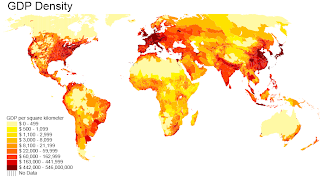
America’s global cultural chauvinism can be seen as a function of economic power. As America and Europe had the most economic power in the world, it was only natural that that Western culture would be more likely to be exported abroad in the form of not only products, but entertainment. The higher GDP per capita is the more disposable income consumers have to spend in such areas as entertainment, creating a more sophisticated pop-culture industry. As one can see by clicking on the above link, the majority of higher GDP per capita nations are still concentrated in North America and Europe. In Asia, only Japan, Korea, and Taiwan posess GDP per capita on a level equal to or higher than most European or North American nations. However, the global balance of economic power seems to be shifting ever increasingly away from Europe and America, and towards Asia, particularly China and Japan. As can be see on the graphic to the right there are already large concentrations of GDP in Japan, Korea, and North Eastern China equal to those in Western countries (indicated by deep scarlet). Japan has already reached a point where it is exporting culture to most of Asia in the form of Hamasaki Ayumi, Utada Hikaru, Johnny’s boy bands, manga, anime, fashion, and movies. Korea too has begun exporting its popular drama and music groups to the rest of Asia. With most of the acts listed before being fluent in several languages, including English, it seems only a matter of time before one of them makes significant waves on a more global scale.
BOA is a prime example of cultural globalization at work. She is a trilingual Korean singer whose biggest market is Japan, and her new album will be in entirely in English. She is demonstrative of the openness of Japanese culture to new ideas and culture from abroad. Japan has had a history of adopting foreign cultural ideas and rapidly remodeling it into something that is uniquely Japanese. In the same way, BOA’s Korean identity was not de-emphasized, however she was marketed as being kawaii ( the Japanese word meaning cute), a particularly Japanese image. She was presented as something bot h foreign, and therefore interesting, but also something safe. For that reason, her popularity in Japan easily exceeds her popularity in Korea, and the majority of her record sales and endorsements are in Japan. Narrowly she can be seen as part of the Korean Wave, the great increase in cultural exchange between Japan and South Korea, but more broadly as Japan’s growing openness to international trends, fashion, and culture.
The last time a Japanese artist had success in the U.S. was 1961, when a song called “sukiyaki”reached number one. Utada Hikaru, Japan's leading pop singer (both critically and commercially) attempted to release an album in 2005. Despite Utada having grown up in New York City and being a native speaker of the English language that effort failed to sell over 50,000 copies in the U.S. (although in Japan, it is the best selling English album ever). It is important to note that attempt involved a rather radical change of artistic representation that left Utada the artist in an awkward position. Her Japanese image is that of an intelligent, slightly dorky, musician, otherwise a multidimensional personality. However her American label decided to market her in different manner, most notably wearing a bikini under a clear raincoat for her lead single, “Easy Breezy”. In comparison to the video for either her previous Japanese single "Colors" or the following single "Be My Last", she is portrayed so differently as to almost make one wonder if it is the same person. If one goes further to actually analyze the lyrics you find an even greater disparity. The lyrics for both Japanese songs are sophisticated analyses on life and human. relationships, whereas the most memorable part of the American single was the line, "You're Easy Breezy and I'm Japaneezy". In order to sell albums, Island Records chose to reduce Utada to a one dimensional character that failed to resonate with the music buying public. American media commonly responds to Asian females, by exoticiing and over-sexualing them.
BoA also seems to be facing the same pressure to adapt to the American market, by presenting herself in a more aggressive and sexual manner in the video for the new single,"Eat You Up". When compared to the video for "Eat You Up" with either of her preceding Japanese singles,“Kissing You”and “Sparkle”, it is apparent that it has been decided to shift her away from a kawaii image towards a more sexual, urban image. This corresponds to previous portrayals of Asian women in American media. However, because this method did not work for Utada, it seems questionable how successful it will be for BoA. Fortunately for BoA, her lead single avoids any lyrical blunders on the scale of the before mentioned "japaneezy" line. It remains to be seen if BoA can create a image capable of engaging the American's public's attention, and then maintaining that attention long enough to establish a career.It will be difficult for BoA to carve out an individual artistic personality without first erroding stereotypes held by many Americans. As Asia becomes a more powerful economic presence, the amount of Asian culture that is exported abroad will likely chip away at American stereotypes. However, hit single or not, that may just be too late for BoA.
The American music industry demonstrates the one sided nature of cultural globalization particularly well. One can find top ten albums and singles by American artists in nearly every country, however it has been rare for foreigners to have chart success in the U.S. Additionally, it is unheard of there being any popular Asian singers in the U.S. There is the rare British or Canadian artist that achieves success stateside, but those countries are culturally the closest to American culture. This suggests a surprising degree of insularity for a country that sees itself a nation of immigrants and a melting pot of different cultures. By contrast, Japan is a largely mono-ethnic nation such as Japan, that is in many ways much more receptive to global cultural, demonstrated by the popularity of 3rd culture artists such as BOA or Utada Hikaru. The failure of Japanese music artists to achieve popularity abroad was affected by the economic dominance of the West until very recently, and on a micro level, confusion about how to market Asian artists in the US due to existing stereotypes.
America’s global cultural chauvinism can be seen as a function of economic power. As America and Europe had the most economic power in the world, it was only natural that that Western culture would be more likely to be exported abroad in the form of not only products, but entertainment. The higher GDP per capita is the more disposable income consumers have to spend in such areas as entertainment, creating a more sophisticated pop-culture industry. As one can see by clicking on the above link, the majority of higher GDP per capita nations are still concentrated in North America and Europe. In Asia, only Japan, Korea, and Taiwan posess GDP per capita on a level equal to or higher than most European or North American nations. However, the global balance of economic power seems to be shifting ever increasingly away from Europe and America, and towards Asia, particularly China and Japan. As can be see on the graphic to the right there are already large concentrations of GDP in Japan, Korea, and North Eastern China equal to those in Western countries (indicated by deep scarlet). Japan has already reached a point where it is exporting culture to most of Asia in the form of Hamasaki Ayumi, Utada Hikaru, Johnny’s boy bands, manga, anime, fashion, and movies. Korea too has begun exporting its popular drama and music groups to the rest of Asia. With most of the acts listed before being fluent in several languages, including English, it seems only a matter of time before one of them makes significant waves on a more global scale.
BOA is a prime example of cultural globalization at work. She is a trilingual Korean singer whose biggest market is Japan, and her new album will be in entirely in English. She is demonstrative of the openness of Japanese culture to new ideas and culture from abroad. Japan has had a history of adopting foreign cultural ideas and rapidly remodeling it into something that is uniquely Japanese. In the same way, BOA’s Korean identity was not de-emphasized, however she was marketed as being kawaii ( the Japanese word meaning cute), a particularly Japanese image. She was presented as something bot
 h foreign, and therefore interesting, but also something safe. For that reason, her popularity in Japan easily exceeds her popularity in Korea, and the majority of her record sales and endorsements are in Japan. Narrowly she can be seen as part of the Korean Wave, the great increase in cultural exchange between Japan and South Korea, but more broadly as Japan’s growing openness to international trends, fashion, and culture.
The last time a Japanese artist had success in the U.S. was 1961, when a song called “sukiyaki”reached number one. Utada Hikaru, Japan's leading pop singer (both critically and commercially) attempted to release an album in 2005. Despite Utada having grown up in New York City and being a native speaker of the English language that effort failed to sell over 50,000 copies in the U.S. (although in Japan, it is the best selling English album ever). It is important to note that attempt involved a rather radical change of artistic representation that left Utada the artist in an awkward position. Her Japanese image is that of an intelligent, slightly dorky, musician, otherwise a multidimensional personality. However her American label decided to market her in different manner, most notably wearing a bikini under a clear raincoat for her lead single, “Easy Breezy”. In comparison to the video for either her previous Japanese single "Colors" or the following single "Be My Last", she is portrayed so differently as to almost make one wonder if it is the same person. If one goes further to actually analyze the lyrics you find an even greater disparity. The lyrics for both Japanese songs are sophisticated analyses on life and human. relationships, whereas the most memorable part of the American single was the line, "You're Easy Breezy and I'm Japaneezy". In order to sell albums, Island Records chose to reduce Utada to a one dimensional character that failed to resonate with the music buying public. American media commonly responds to Asian females, by exoticiing and over-sexualing them.
BoA also seems to be facing the same pressure to adapt to the American market, by presenting herself in a more aggressive and sexual manner in the video for the new single,"Eat You Up". When compared to the video for "Eat You Up" with either of her preceding Japanese singles,“Kissing You”and “Sparkle”, it is apparent that it has been decided to shift her away from a kawaii image towards a more sexual, urban image. This corresponds to previous portrayals of Asian women in American media. However, because this method did not work for Utada, it seems questionable how successful it will be for BoA. Fortunately for BoA, her lead single avoids any lyrical blunders on the scale of the before mentioned "japaneezy" line. It remains to be seen if BoA can create a image capable of engaging the American's public's attention, and then maintaining that attention long enough to establish a career.It will be difficult for BoA to carve out an individual artistic personality without first erroding stereotypes held by many Americans. As Asia becomes a more powerful economic presence, the amount of Asian culture that is exported abroad will likely chip away at American stereotypes. However, hit single or not, that may just be too late for BoA.
Subscribe to:
Posts (Atom)


